China Moves DF-61 ICBM Into Routine Military Training: What Beijing's New Missile Changes
China's DF-61 nuclear-capable intercontinental ballistic missile has reportedly entered routine military training. Explore its estimated range, potential cap...
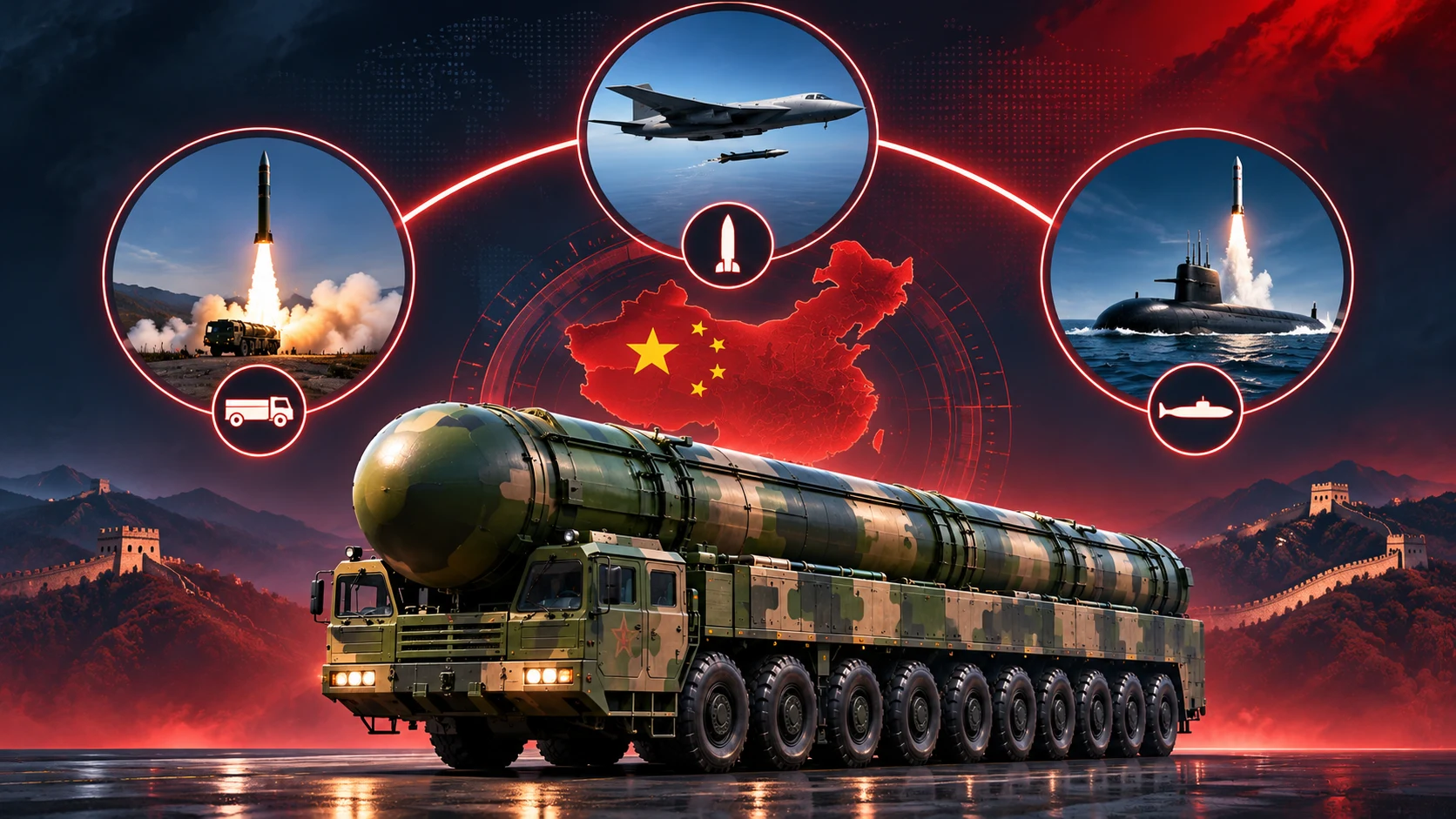
On November 5, 2026, Chinese state television confirmed that the People’s Liberation Army Rocket Force has integrated the Dongfeng-61 into routine unit exercises. The announcement comes just 14 months after Beijing first drove the missile through Tiananmen Square during the September 2025 military parade. For strategic weapons of this scale, an operational turnaround under two years is remarkably swift.
Fielding a strategic missile in just over a year is an unusually quick turnaround. State media praised the rollout, but foreign defense ministries are still trying to verify the missile's actual performance.
Building Out the Modern Nuclear Triad
During its 2025 parade debut, the DF-61 rolled through Beijing alongside an array of new delivery systems. The public display included the JL-1 air-launched missile, the JL-3 submarine-launched ballistic missile, and the land-based DF-31BJ. Together, these weapons demonstrate Beijing's push to build a balanced nuclear triad across land, air, and sea.
The DF-61 upgrades the land-based side of that deterrent. Fixed missile silos show up clearly on commercial and military satellite feeds, but mobile launchers can vanish into mountain tunnels, blend with highway traffic, or hide under dense forest canopies. That flexibility shields the missile from surprise attacks and guarantees that China can retaliate even after absorbing an enemy strike.
Why the Missile Moved to Troops So Quickly
Building a brand-new strategic missile normally eats up a decade of engineering reviews, motor burns, and test launches. The speed of the DF-61's fielding points to heavy groundwork laid years before its parade debut.
Early Testing and Development
Military commentator Shao Yongling pointed out on CCTV that Chinese weapons rarely roll through Beijing parades without passing rigorous trials first. Rocket Force units likely tested prototype boosters and guidance systems long before state television showed the hardware to the public.
Shared Technology With the DF-41
Physical evidence also suggests the missile borrows heavily from the DF-41. The two systems share nearly identical launch canisters and heavy wheeled chassis. If Beijing adapted the DF-41's solid-fuel engine, factory lines, and ground-support vehicles, Rocket Force battalions could adopt the new weapon without rebuilding their supply chains. China's defense ministry has kept quiet about shared parts, but reusing proven components would shave years off field deployment.
Examining the 18,000-Kilometer Range Claim
Beijing keeps official performance data under state secrecy laws, but commentators on Chinese social media claim the DF-61 boasts an operational range of 18,000 kilometers.
Comparing the DF-61 With the DF-41
Western defense experts view that figure with caution. For context, the Center for Strategic and International Studies (CSIS) estimates that China’s existing DF-41 flies up to 15,000 kilometers. That distance already covers the entire continental United States from bases deep in western China.
Potential Southern Polar Flight Paths
If the 18,000-kilometer range is accurate, it fundamentally changes Beijing's targeting options. With that kind of propellant capacity, the DF-61 could reach North America via southern polar routes. Such flight paths bypass early-warning radar arrays and missile defense batteries stationed in Alaska and the Arctic.
Multiple Independently Targetable Re-entry Vehicles (MIRVs)
Analysts also suspect the DF-61 carries Multiple Independently Targetable Re-entry Vehicles (MIRVs). A single booster could release separate nuclear warheads across several cities. This tactic complicates interception for American missile defense batteries. Beijing has not disclosed the weapon's exact warhead capacity, payload weight, or circular error probable.
Supplementing the DF-41 Arsenal
The arrival of the DF-61 does not mean China will retire its existing DF-41 force. The DF-41 is a mature, solid-fueled system that operates from both road-mobile launchers and reinforced silos. Military planners in Beijing will likely deploy both platforms alongside one another.
Advantages of Solid-Fuel Technology
Solid-fuel rocket motors give road-mobile units a critical edge over older liquid-fueled designs. Solid propellant remains stable inside sealed booster stages for decades. Crews do not need to pump volatile liquid fuel into the airframe before launch. Instead, they can erect the canister and fire within minutes of an order.
Strengthening China's Second-Strike Deterrent
That agility shields China's second-strike deterrent. Even if adversary strikes knock out fixed military bases, mobile Rocket Force crews can retaliate from concealed positions deep in the interior.
Missing Telemetry
State television footage shows launcher trucks on the move, but Beijing has released zero hard performance data.
Unverified Performance Specifications
Foreign intelligence agencies still lack confirmed figures on the weapon's payload weight, guidance precision, or maximum range. Outside radars have not tracked telemetry from live flight tests over open ocean. Until the Rocket Force launches full-trajectory trials across international waters, military analysts cannot verify whether the DF-61 delivers a genuine technological leap or simply refines the DF-41.
I can also organize the article into a more SEO-friendly heading structure while keeping every original word unchanged.
ImageSource: ChatGPT
श्रेणी (Category): Defence & Security