Turkey Inducts First 3 Kizilelma Unmanned Fighter Jets, Marking a Major Milestone in Military Aviation
Turkey has inducted its first three Bayraktar Kizilelma unmanned fighter aircraft into military service, marking a major milestone in autonomous combat aviat...
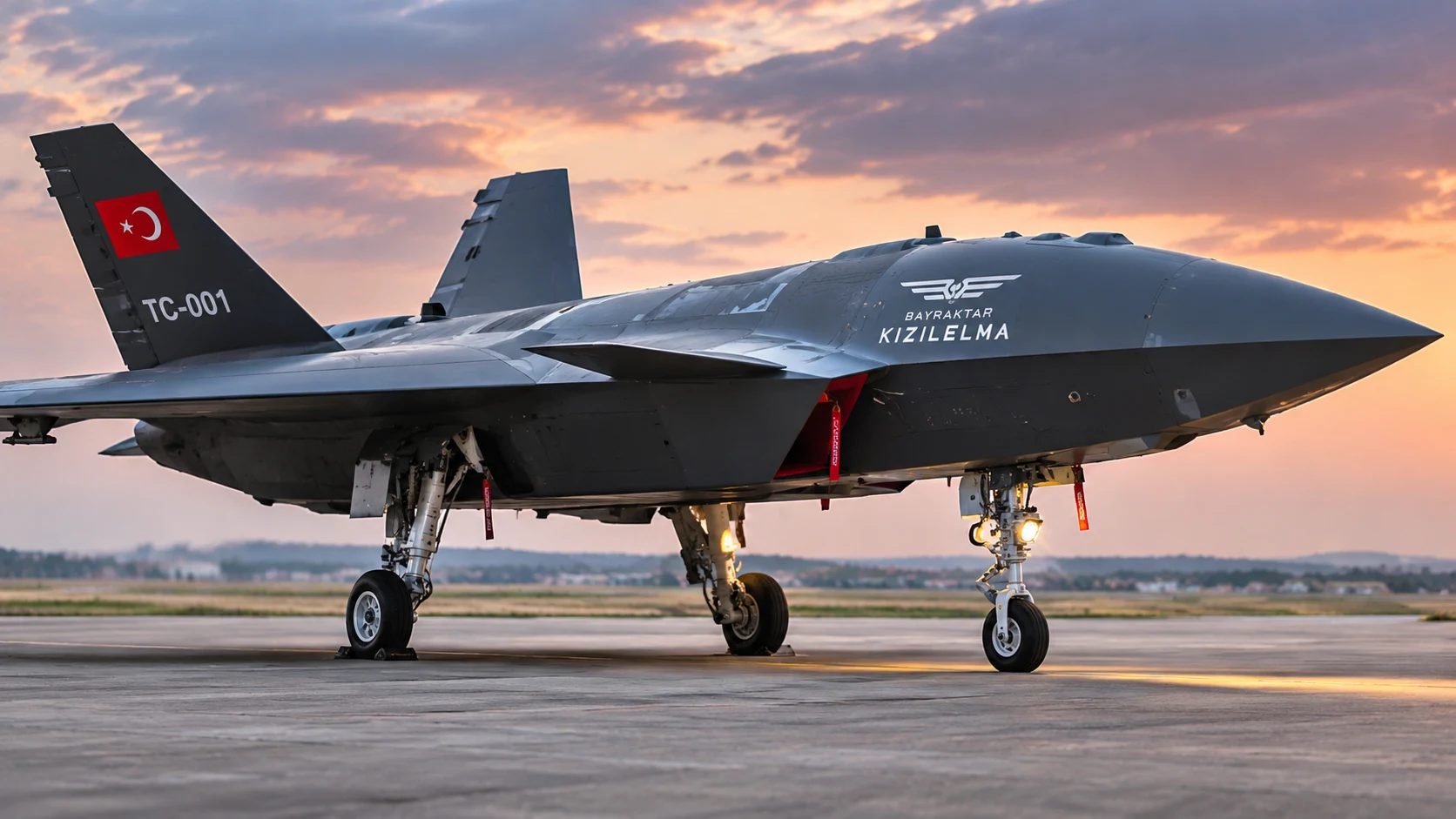
Turkey has put its first three Bayraktar Kizilelma unmanned fighter aircraft into military hands, handing the jet-powered aircraft over to armed forces on November 19, 2026. Built by domestic defense contractor Baykar, the aircraft move from an ambitious testing campaign directly into the country’s active defense inventory.
Company officials say the Kizilelma logged around 600 test and training sorties before acceptance trials wrapped up. Baykar has described the handover as the first operational induction of a dedicated unmanned fighter anywhere in the world. Turkish defense officials have kept quiet about exactly which units received the planes, but the delivery shifts the program out of developer hangars and into the ranks of the Turkish military.
A Departure From Slow-Flying Drones
Modern drone warfare has spent the last ten years relying on propeller aircraft. Workhorses like the American MQ-9 Reaper or Turkey’s own Bayraktar TB2 and Akinci proved deadly in regional conflicts, yet they share a common vulnerability: they are slow, easy to spot on radar, and largely defenseless against modern surface-to-air missile batteries.
Kizilelma was drawn up to solve that problem. Instead of a high-aspect glider wing, it has a swept fighter airframe, canard foreplanes, and an internal turbofan engine. It can hit Mach 0.9, cruise comfortably at Mach 0.6, and operate up to 40,000 feet with an operational altitude of 25,000 feet. It is built to carry 1,500 kilograms of weapons on an airframe with an 8,500-kilogram maximum takeoff weight, giving it a combat radius near 500 nautical miles and over three hours of flight time.
The jet is roughly 14.5 meters long with a 10-meter wingspan and stands 3.5 meters high. More than just a strike platform, Kizilelma is meant to fly contested missions, dogfight hostile aircraft, and work in tandem with piloted jets.
The Sinop Live-Fire Intercept
The aircraft proved its air combat credentials on November 29, 2025, during weapons testing off the coastal town of Sinop.
Cruising over the Black Sea, the drone turned on its nose-mounted MURAD active electronically scanned array radar, built by Turkish firm ASELSAN. The gallium-nitride radar picked up and tracked a fast-moving, jet-powered target drone. Kizilelma then fired a GÖKDOĞAN beyond-visual-range missile, developed by state defense institute TÜBİTAK SAGE, which chased down the target and destroyed it in midair.
Shooting down an aerial target during a military trial is a big step for an unmanned plane, demonstrating coordinated radar tracking, sensor lock, and missile guidance. Still, knocking out a target drone on a planned trajectory is far simpler than surviving a real fight against crewed fighters backed by advanced jamming pods and layered air defenses.
Internal Bays and Low Radar Cross-Section
To give the jet a chance against modern air defense networks, Baykar shaped Kizilelma with chiseled edges, inward-canted vertical stabilizers, and blended wings to scatter incoming radar beams.
Hanging heavy bombs or missiles out on wing pylons ruins an aircraft's stealth and creates heavy drag at high speeds. To avoid this, Kizilelma uses an internal weapons bay that keeps munitions tucked inside the fuselage until release. The arrangement proved itself in July 2026, when the drone dropped indigenous TOLUN winged glide bombs and laser-guided TEBER-82 kits straight from its internal bay, hitting designated surface targets.
For less dangerous missions where radar detection is not a major issue, the jet can carry heavier ordnance on external wing stations, including the JET-230 supersonic missile. Engineers are quick to stress that stealth does not mean invisible; it simply shrinks the range at which enemy radars can lock on.
Sensors, Autonomous Flight, and Wingman Trials
Inside the nose and fuselage sits a suite of homegrown avionics. Beyond the MURAD AESA radar, the jet carries the TOYGUN electro-optical sensor package, integrated in November 2025. TOYGUN gives the drone high-definition infrared tracking and laser targeting without transmitting radio signals that could reveal its location.
The plane does not rely on a pilot nudging a control stick from a ground trailer. Flight control computers manage the aerodynamics and navigation automatically. In December 2025, two prototypes flew in tight formation using autonomous fleet algorithms, reacting to each other without human direction.
Five months later, in May 2026, Kizilelma joined Italian-built Leonardo M-346 trainer jets in the sky to test manned-unmanned teaming concepts. The goal is straightforward: in future air operations, a single human pilot could send several Kizilelma drones ahead into heavy danger to jam radars, draw defensive fire, or launch weapons.
Five Years of Rapid Development
The aircraft went from preliminary drawings to the flight line at unusual speed. Sketches first surfaced publicly in July 2021. Within eight months—by March 2022—Baykar had crews on the shop floor assembling prototype number one.
The maiden flight came on December 14, 2022, at Çorlu Air Base. Throughout 2023, the jet logged formation flights beside the twin-engine Akinci and joined public aerial displays alongside Turkish Air Force fighters. Firing trials gathered pace in late 2025 with guided bomb tests and the Sinop air-to-air kill, followed by internal bay live releases in July 2026 that cleared the path for the three aircraft delivered on November 19, 2026.
Short-Deck Carriers and Future Maritime Missions
Baykar also drew up Kizilelma to operate at sea. With strengthened landing gear and low approach speeds, the drone is intended to deploy from short-deck warships like Turkey’s amphibious assault ship, the TCG Anadolu.
Putting jet combat aircraft on a vessel that lacks catapult gear gives Turkish naval commanders long-range airborne radar and strike capabilities without having to buy or build a massive, expensive supercarrier.
The Realities Ahead
Handing over three jets is an important step, but it is not the same as full wartime readiness.
These first planes are entering an intensive operational test and evaluation period. Military personnel still need to figure out field maintenance routines, secure satellite links against electronic jamming, and establish clear operational doctrines for flying alongside F-16s and the upcoming KAAN fighter. Weapons envelopes will also need further expansion.
Even so, the induction highlights Turkey’s growing push to build its own weapons. After Western arms embargoes and its 2019 exit from the F-35 program, Ankara poured funding into domestic aerospace engineering. Following the worldwide export success of the TB2, Kizilelma represents a sharp push into high-performance combat aviation, putting hardware into the field while much of the world is still debating the concept on paper.
ImageSource: ChatGPT
श्रेणी (Category): Defence & Security