India Announces $1.62 Billion Economic Package for Nepal's Flood Recovery
India has announced a $1.62 billion economic assistance package to help Nepal recover from devastating floods, rebuild damaged infrastructure, and support lo...
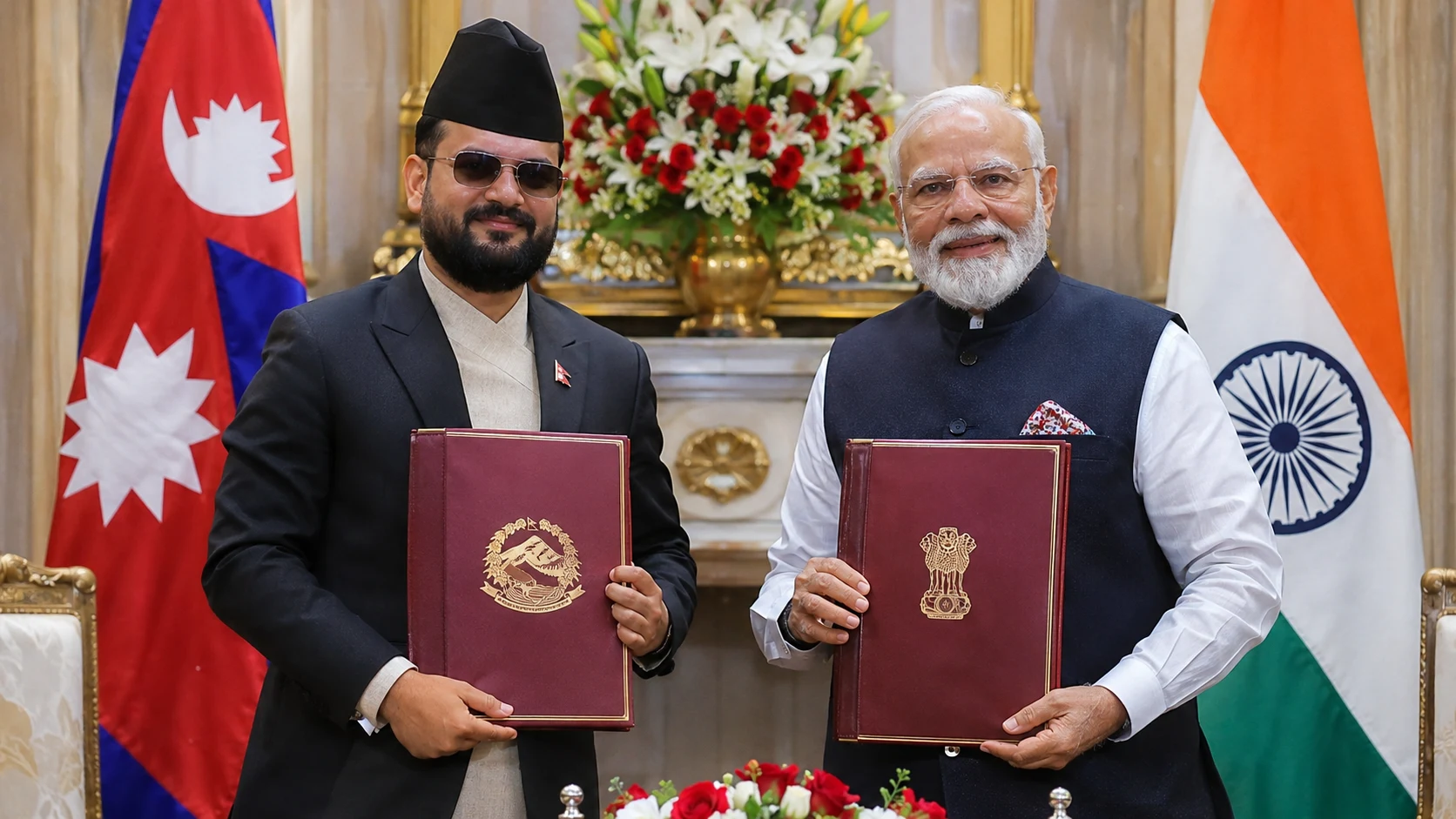
NEW DELHI — Indian Prime Minister Narendra Modi and Nepal’s Prime Minister Balendra Shah stood side by side in New Delhi on November 23, 2026, putting their signatures to a 240-billion-rupee pledge. In US dollars, that works out to about $1.62 billion. The announcement served as the centerpiece of Shah’s two-day visit to India, his very first bilateral trip abroad since taking office in March 2026. The headline purpose was simple: help Nepal dig out from the ruinous floods of August and pump capital into its long-term development. Beyond the relief money, the two prime ministers spent their meetings discussing expanded economic cooperation, transport links, and general bilateral ties.
Modi sounded an upbeat note in public. The money, he said, would rebuild wrecked infrastructure, help flooded-out families earn a living again, open fresh commercial doors, and get the country ready for future disasters.
Then came the silence.
Neither prime minister offered a single word on how the $1.62 billion is actually put together. How much of this cash comes as an outright grant? How much is a concessional loan or conditional development credit? Nobody in New Delhi or Kathmandu will say. Project-by-project funding lists have not been drawn up. There is no public timetable for when the money will move.
That ambiguity is not trivial. Nepal has been burned by Indian development financing before, frequently finding itself tangled in red tape and rigid financing rules that left promised credit lines sitting unused. With Kathmandu already nervous about debt sustainability and its national balance sheet, swallowing commercial debt to rebuild washed-out valleys carries real financial peril.
The physical destruction in the mountains explains why Shah had to make the trip. On August 26, 2026, an ice-and-rock avalanche broke loose near the Nepal-China border. What followed was a wall of water, mud, and boulders charging through the Bhote Koshi and Trishuli river systems. The debris flow ripped through Rasuwa, Nuwakot, Dhading, and neighboring districts. Bridges snapped in half. Mountain highways vanished into the riverbeds. Houses, farming terraces, civic buildings, and hydropower stations were chewed up within hours.
Official casualty lists are still being verified, but early counts are grim. About 1,500 people are confirmed dead. Over 5,200 others are still missing, buried under deep debris fields and now presumed dead.
The financial ledger is just as ugly. A government-led Rapid Damage and Needs Assessment put the total disaster effects at roughly $2.7 billion, dividing the blow between $1.81 billion in direct physical destruction and $883 million in broader economic losses.
Paying for the recovery is another story entirely. That same assessment concluded that Nepal needs roughly $4.77 billion just to get back on its feet.
Most of that money has to go toward energy systems and transport links. The August disaster battered multiple hydropower projects and electricity lines, gutting local power grids and interrupting the electricity trade that Nepal has been expanding with India. Destroyed roads and bridges also cut off remote mountain communities, choking trade routes and leaving whole towns stranded without access.
Repairing the damage will take years of sustained financing, engineering support, and international cooperation. The funding must cover hydropower grids, highways, bridges, housing, rural farm recovery, and frontline public services. But simply rebuilding what stood before would be foolish. To withstand the next deluge, new infrastructure must include serious risk reduction: stronger flood barriers, stabilized mountain slopes, early-warning alarms, and actual disaster preparedness on the ground.
Geography and daily commerce tie the two neighbors together anyway. India and Nepal share an open border, deep cultural and historical kinship, and completely free movement of people and trade. India remains one of Nepal’s largest trading partners and its main source for fuel and everyday staples.
Electricity has added a new commercial dimension to that relationship. Nepal has grown increasingly central to India’s regional energy plans as bilateral power trade picks up speed. During Shah’s visit, the two prime ministers moved to capitalize on that momentum, inaugurating and advancing several cross-border infrastructure initiatives, including railway connectivity and energy-linked projects.
If the cash actually flows to priority spots, the $1.62 billion could give Nepal's reconstruction drive a real shot in the arm. Crews could repair roads, bridges, electricity setups, and civic buildings, while families fix broken houses and restart their livelihoods. It would also throw open sizable contracts for Indian and Nepalese businesses working in construction, heavy engineering, energy, and related trades.
Still, a handshake in New Delhi does not shovel mud out of a turbine. India’s $1.62 billion covers barely a third of Nepal’s $4.77 billion rebuilding bill. Whether this pledge actually rebuilds a single bridge depends on project approval speeds, the final loan-to-grant split, and whether both capitals can bulldoze through the administrative inertia that has stalled cross-border work before. Shah must rebuild a broken country. Modi wants a stable, functioning neighbor on his northern border. The real work starts when the small print is finally written.
ImageSource: ChatGPT
श्रेणी (Category): International News