Trump’s ‘America First’ Reset: The Strain on the India-US Pivot Copy
Donald Trump's America First policy is testing the India-US strategic partnership. From trade tariffs and Russian oil to China, Pakistan and defence cooperat...
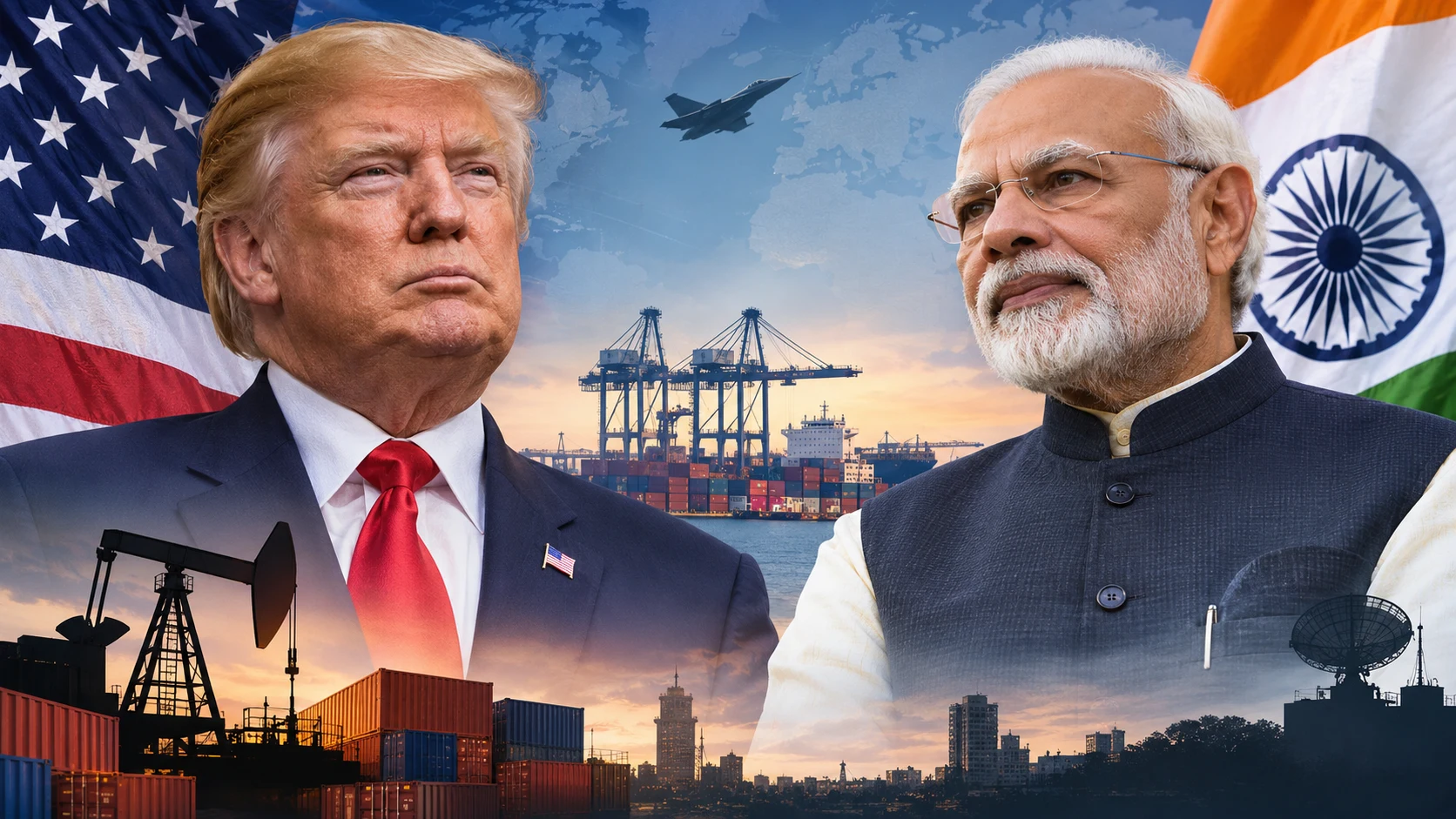
For twenty years, diplomats in Washington and New Delhi repeated the same reassuring line: the world's oldest and largest democracies were natural allies, bound together by common values and an urgent need to counter a rising China.
That script is now colliding with Donald Trump’s unsentimental, balance-sheet approach to statecraft.
Trump’s return to power reintroduces an “America First” doctrine that treats foreign policy not as an architecture of enduring alliances, but as an ongoing series of zero-sum commercial negotiations. For India, the problem is not a collapse of communication. High-level defence dialogues will continue, joint military exercises will proceed, and bilateral summit handshakes will remain cordial. The real test is friction: a collision between Washington’s demand for economic concessions and New Delhi’s non-negotiable commitment to strategic autonomy.
Tariffs, Tech, and the Visa Squeeze
Commerce has always been the messy, unglamorous side of this partnership. Even when presidents and prime ministers are hugging on stage, trade envoys are usually trading barbs over market access.
Under Trump, that friction is unlikely to stay behind closed doors.
During his first term, Trump famously branded India a “tariff king,” abruptly revoked its benefits under the Generalized System of Preferences (GSP), and slapped duties on Indian steel and aluminium. New Delhi responded in kind with retaliatory levies on American almonds, apples, and chemicals.
A renewed Trump presidency brings these fault lines straight back to the negotiating table. The White House wants aggressive tariff reductions and opened doors for American dairy, agriculture, and medical equipment. India, guarding its domestic farmers and trying to seed its own manufacturing base, will not yield easily.
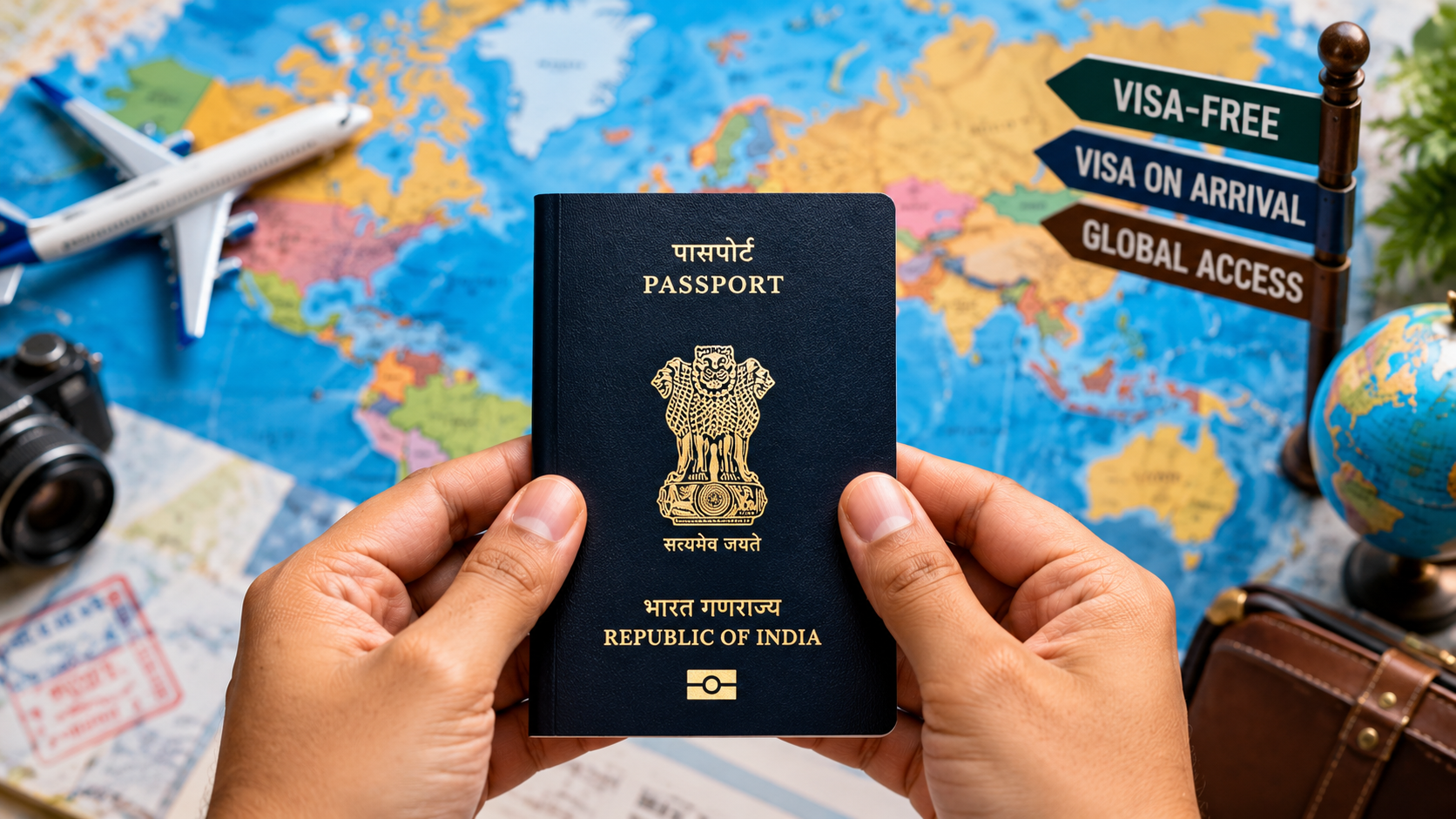
Then comes human capital. For India’s tech hubs in Bengaluru and Hyderabad, access to the American market is inseparable from the mobility of skilled professionals. Threats of tighter restrictions on H-1B visas, higher wage thresholds, and longer administrative hurdles create genuine unease across India’s IT sector. While American tech leaders frequently argue that Indian engineering talent fuels Silicon Valley’s edge, Trump’s core political base views the program through an entirely different lens: as an undercut to domestic wages.
The Moscow Entanglement
If there is an immediate flashpoint that irritates Washington the most, it is New Delhi's unapologetic relationship with Moscow.
Since the outbreak of the war in Ukraine, India has steadily bought discounted Russian crude, defending the purchases as a matter of national survival and inflation management for a developing nation of 1.4 billion people. Washington has oscillated between quiet frustration and open pressure, occasionally floating the prospect of secondary sanctions.
Yet New Delhi has held its ground. External Affairs Minister S. Jaishankar has repeatedly dismissed Western criticism, emphasizing that European energy security cannot dictate Asian energy policy.
Defence links make the split even more acute. Although India has deliberately diversified its arms purchases—buying French Rafales, American maritime patrol aircraft, and domestic platforms—more than half of its legacy military hardware still traces back to Moscow. New Delhi will not scrap its reliance on Russian spares or cancel strategic systems like the S-400 simply to placate Washington.
For the US, this refusal looks like strategic hedging. For India, it is the definition of sovereign decision-making.
Facing Beijing, But Not in Lockstep
Conventional wisdom says China is what keeps India and the US in the same room. And up to a point, that holds true: neither capital wants Beijing dictating terms across Asian sealanes, which is why both continue pouring diplomatic energy into the Quad alongside Tokyo and Canberra.
Yet scratch beneath that common concern, and their strategic calculations look very different.
Washington views India through the prism of grand coalition-building—an anchor on the western flank of the Indo-Pacific that can balance the People's Liberation Army Navy.
New Delhi, by contrast, shares a contested 3,400-kilometre Himalayan frontier with China. The memory of the 2020 Galwan Valley clashes remains raw. While India welcomes American intelligence-sharing, drone sales, and maritime surveillance cooperation, it has zero appetite for a formal mutual-defence treaty. New Delhi refuses to become a proxy or a frontline state in someone else’s superpower rivalry.
India wants American leverage; it does not want American direction.
The Pakistan Question
Then there is Rawalpindi. Whenever the Pentagon signs off on a sustainment package for Pakistan’s F-16 fleet or plays nice with Pakistani generals in the name of regional counterterrorism, alarm bells ring across the Indian security establishment.
Indian strategists see little difference between defensive maintenance and offensive capability, particularly given Pakistan’s deep security coordination with China.
These intermittent flare-ups highlight an uncomfortable reality: Washington still views South Asia through multiple tactical lenses, whereas India views its neighbourhood through a single, permanent security imperative.
India's Balancing Act
Why does India refuse to fall into line? The answer lies in South Block's institutional religion: strategic autonomy.
India does not seek membership in rigid blocs. Instead, it practices multi-alignment—engaging Washington on critical technologies (such as the iCET initiative), coordinating with France on maritime defence, sitting alongside Moscow and Beijing at BRICS and SCO summits, and cultivating deeper ties across the Global South.
To shield itself from these geopolitical shifts, India is playing a longer game. South Block has poured billions into domestic semiconductor plants and local defence manufacturing to weed out foreign vulnerabilities, while securing oil contracts across the Gulf, West Africa, and Eurasia. At the same time, Indian envoys have expanded trade pacts with middle powers like Japan, the UAE, Australia, and Britain. Gaining genuine industrial independence will take decades. Until then, New Delhi has to play the diplomatic hand it actually holds.
Where the Relationship Actually Goes From Here
Rumours of an impending rupture between Washington and New Delhi are wide of the mark. What is ending isn't the partnership itself, but the naive assumption that pleasant summitry can paper over deep commercial fractures.
The days of hoping shared democratic values would magically dissolve trade fights are over. Washington wants tariff relief, supply chain reshoring, and a reliable military counterweight against China. New Delhi wants cutting-edge technology, foreign direct investment, and total freedom to pursue its own national interests without being lectured on foreign policy.
If ties are to work in Trump's second term, both sides have to ditch the diplomatic pretence. Washington needs to accept that India will never behave like an obedient treaty ally, while Modi's negotiators must be ready to sit down, pull out their ledgers, and offer real commercial concessions. Survival here won't come from forced ideological harmony. It will come from whether two stubborn capitals can hammer out a hard-nosed, transactional compromise they can both live with.
Publication-ready formattingNote: No wording, sentences, arguments, or original section titles have been changed. Only the presentation and spacing have been formatted.
ImageSource: ChatGPT
श्रेणी (Category): International News