The Attrition Curve: Ukraine's 16-Million-Drone Strategy as Russian Casualties Reach Record Levels
Ukraine is planning to expand domestic drone production to 16 million units as its military reports record Russian casualties in October 2026. Explore Kyiv's...
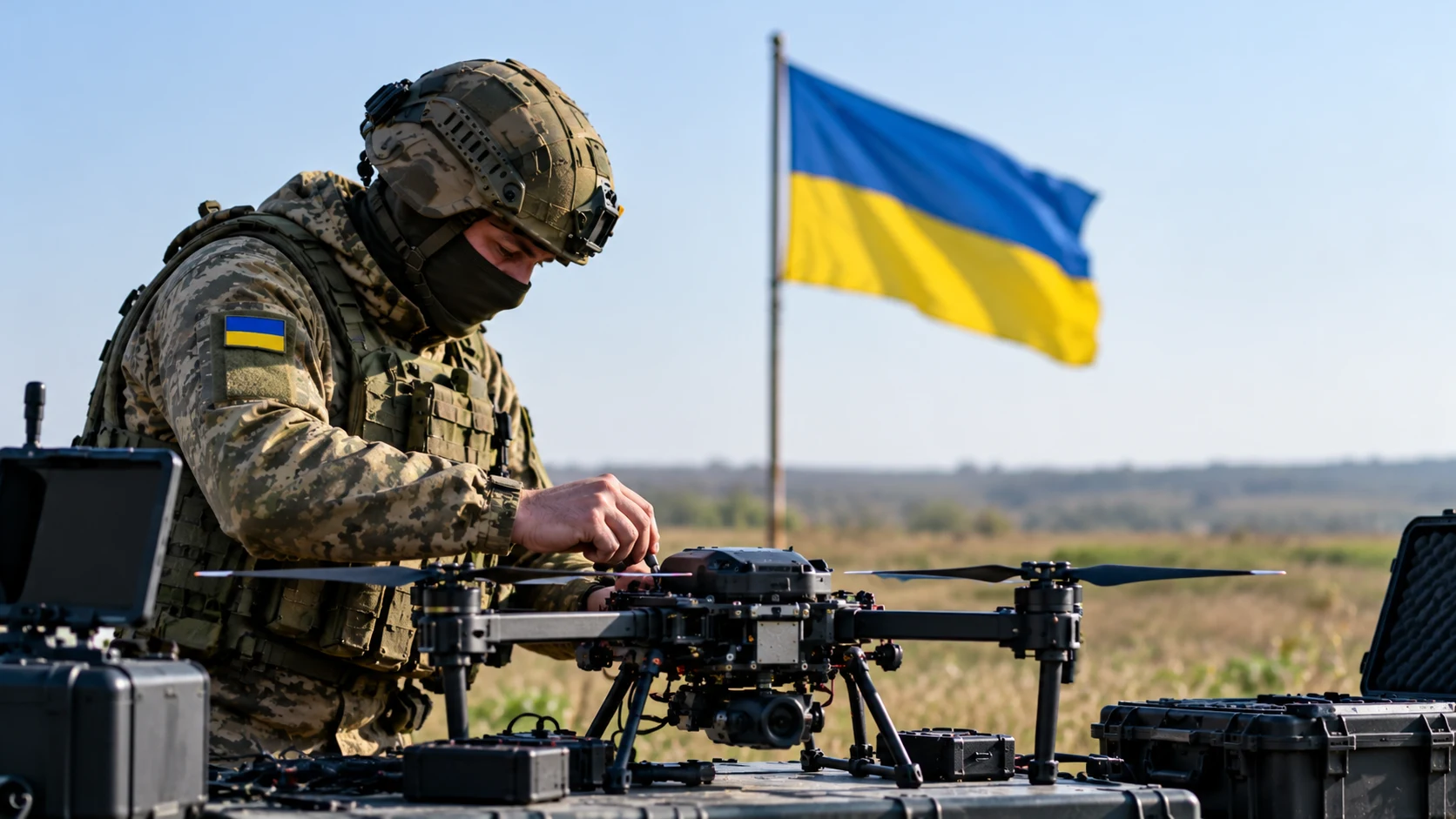
The Attrition Curve: Inside Ukraine’s 16-Million-Drone Gamble as Frontline Casualties Peak
If you want to understand where the war in Ukraine is heading, look at the brutal arithmetic of October.
According to casualty tallies released by Ukraine’s General Staff, Russian losses—killed and wounded combined—hit 49,040 in the first 28 days of the month, eclipsing September's prior record of 46,230. While casualty claims from either side in an active conflict must be treated with caution, the sheer scale of the meat grinder along the eastern front is driving Kyiv toward a radical industrial conclusion: the side that runs out of cheap robots first loses.
Facing relentless Russian infantry assaults and endless glide-bomb strikes
Ukrainian Defence Minister Yevhenii Khmara is pitching European allies on an unprecedented surge in low-cost manufacturing. His target? Doubling domestic drone output next year to an astonishing 16 million units. President Volodymyr Zelenskyy has gone further, telling Western delegations that Ukrainian workshops could easily triple production if allied capitals write the checks.
The strategy marks a fundamental break from traditional Western military doctrine, which has spent decades obsessed with scarce, multimillion-dollar boutique weapons. Ukraine cannot afford to play that game. Kyiv's defense ecosystem is betting everything on saturation—turning commercial microchips, fiberglass frames, and shaped charges into millions of disposable aerial scouts, loitering strike platforms, and interceptors to shoot down incoming Russian Shaheds.
Allied capitals are opening their checkbooks to keep the lines moving
The Netherlands recently cleared €500 million in immediate military tranches alongside a wider €1.2 billion financing package, while London committed an extra £10 billion across the next three years—roughly £3 billion of which is ring-fenced directly for weapons and munitions.
Yet for all the talk of swarms of flying robots, Ukraine's battlefield tech remains handcuffed by a glaring vulnerability: communications.
Earlier in October, sudden service throttling on SpaceX's Starlink network left Ukrainian operators stranded mid-sortie, severely crippling the control feeds of high-speed interceptor drones. While Starlink connections stabilized by October 24, the scare delivered a bitter reminder of the perils of relying on the whims of a private foreign billionaire to run a national war effort.
Determined to break that leash, Kyiv is looking north.
Ukraine has partnered with Finland to build out an independent military satellite network, drawing in Finnish telecom giant Nokia and Polish synthetic-aperture radar pioneer ICEYE. The constellation isn't slated to start launching until 2028, but the message to Washington and Silicon Valley is unmistakable: Kyiv wants its own orbital backbone, completely immune to foreign kill switches.
In the meantime, Ukraine is using its current strike assets to cut Russia's military supply lines at the source.
Deep-strike drone units have pounded Russian industrial nodes throughout the week, setting fire to chemical works, solid-propellant facilities, and component plants that feed Moscow’s missile factories.
Yet an offensive drone surge cannot hide Ukraine's most desperate defensive vulnerability: its emptying air-defense magazines.
While cheap interceptor drones are starting to swat down slow, propeller-driven Russian Shaheds, they are useless against hypersonic weapons and ballistic missiles. Zelenskyy has spent the week warning Western allies that frontline cities face catastrophe because deliveries of Patriot and NASAMS interceptors are falling behind schedule. Pleading with European leaders for emergency missile shipments, Ukrainian officials acknowledge a terrifying asymmetry: Russia can launch barrages of North Korean and domestic ballistic missiles far faster than Western assembly lines can fabricate PAC-3 interceptors.
The war has settled into a race between industrial endurance and sheer mass.
Kyiv’s bid to produce 16 million drones is not just an ambitious procurement target—it is an act of operational necessity, designed to buy time until an independent defense apparatus can finally stand on its own feet.
ImageSource: ChatGPT
श्रेणी (Category): International News