BPCL to Cut Russian Crude Oil Purchases in November 2026
BPCL plans to reduce Russian crude oil purchases in November as higher freight costs make Middle Eastern supplies more commercially attractive. Here's what t...
The Discount Evaporates: Why BPCL Is Cutting Back on Russian Crude
When the math stops working, the tankers stop sailing. It really is that simple.
For nearly two years, Indian state refiners turned discounted Russian crude into pure refining gold, soaking up millions of barrels shunned by European buyers. But that lucrative arbitrage is hitting a wall of rising freight rates, prompting Bharat Petroleum Corporation Limited (BPCL) to sharply scale back its intake of Russian crude for November in favor of traditional Middle Eastern suppliers.
The shift was laid bare by BPCL’s Director of Finance, Vatsa Ramakrishna Gupta, during a post-earnings call with analysts. His message was unvarnished: Russian oil has become too expensive to ship, wiping out the price advantage that made it irresistible in the first place.
During the July-September quarter
Russian barrels accounted for roughly 37 percent of BPCL's total crude diet. That figure is now headed downward as the company leans back into spot and term cargoes from the Persian Gulf for October and November.
The culprit isn't the price of crude at the Russian loading ports
It is the brutal cost of getting it to Indian shores.
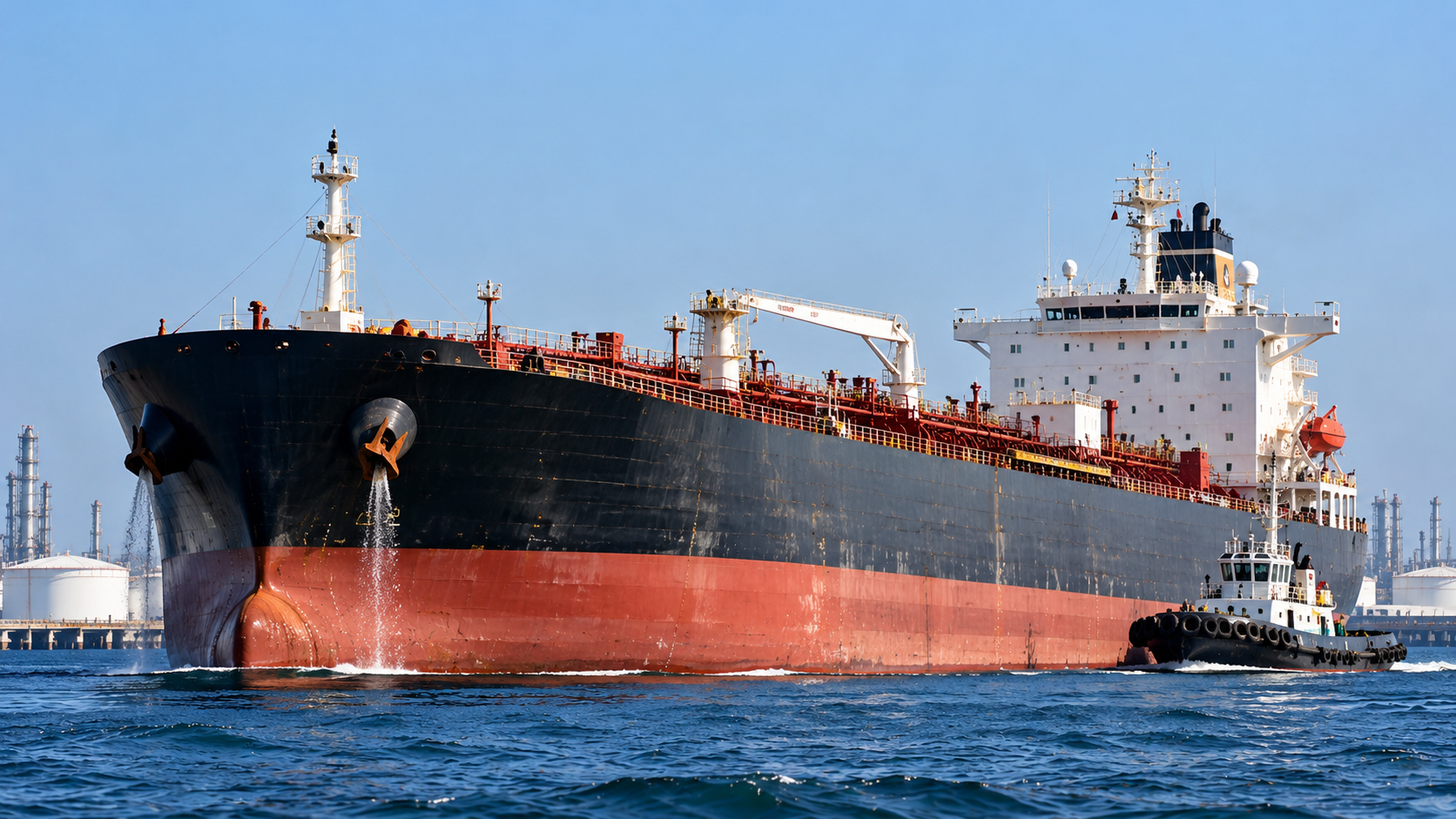
Hauling crude from Russian Baltic ports like Primorsk or Black Sea terminals like Novorossiysk involves a month-long voyage, steep tanker charter rates, and mounting war-risk insurance premiums. By comparison, a supertanker leaving Basra or Ras Tanura reaches BPCL’s coastal refineries in Mumbai or Kochi in less than a week. When shipping costs spike, the delivered "landed cost" of Russian oil quickly overtakes the price of Gulf crude, destroying refinery margins.
According to figures shared with analysts
The delivered premium on Russian crude spiked to an unpalatable $12 to $13 per barrel for October arrivals. However, that squeeze may prove temporary. Market indications suggest the premium for December loadings could collapse back to around $1 to $2 a barrel.
If shipping rates ease and Russian sellers widen their discounts for December, BPCL will happily buy again. If they don't, the taps will stay tightened.
The refiner also has breathing room on the processing side
Scheduled maintenance turnarounds will take several processing units offline across the third and fourth quarters—a 30-day shutdown is slated for parts of the Mumbai refinery, alongside a 30-to-40-day maintenance window at the Kochi complex in Kerala. With overall processing capacity temporarily dialed down, the company can afford to be picky about which barrels it brings into port.
Western observers frequently mistake these fluctuations for geopolitical statements
Speculating whether New Delhi is bowing to Western pressure or cooling ties with Moscow.
The ground reality is far more pragmatic
Indian refiners are cold-blooded margin calculators. They did not buy millions of barrels of Russian Urals out of ideological solidarity, and they are not turning back to Saudi or Iraqi grades out of regional loyalty. They run whichever crude blend delivers the highest gross refining margin on any given Tuesday.
For BPCL and its peer refiners
Russian oil is no longer the automatic, default bargain it was in 2023. It is just another commodity on the trading desk—and right now, the numbers say look elsewhere.
ImageSource: ChatGPT
श्रेणी (Category): Finance